

About the Great Tit
The European population, of this bird, is regarded as Secure by BirdLife International.
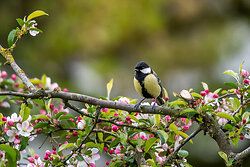
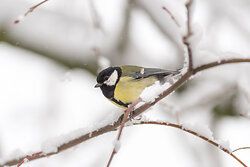
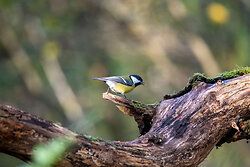
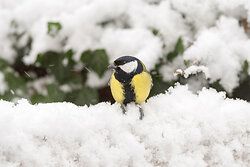
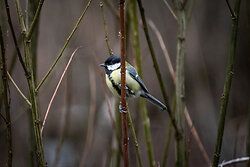
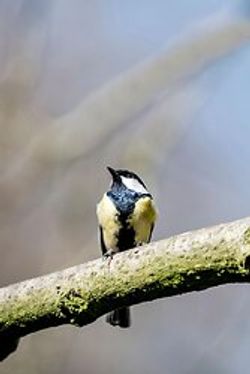
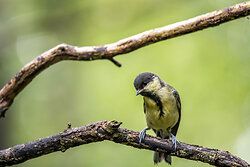
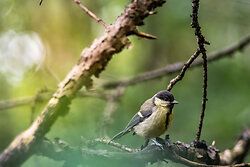
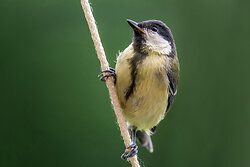
The Great Tit is the largest member of the tit family. It has blue-green colouring above and yellow below with a distinctive black stripe from chest to tail. Its head is black with white cheeks. The tail is blue-grey with white edges.
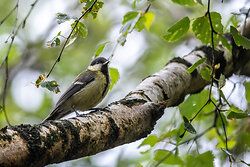
Females are similar to males but the black stripe on the underside is narrower. Juveniles are duller in colour.
Great Tits are a common sight at garden feeding stations such as hanging peanut or seed feeders. They will also feed on or near the ground.
Photo gallery
Specifications
| Scientific name |
Parus major
|
|---|---|
| Family |
Paridae
|
| Habitat |
Woodland and gardens.
|
| Food |
Diet varies with the season. During winter, mainly tree seeds such as beech mast, acorns and sometimes hazelnuts wedged in a crevice and hammered open. Summer fare consists mainly of insects, spiders and small snails; with fruit seeds and flesh, during the autumn.
|
| Height |
14cm
|
| Weight |
14 - 22g
|
| Lifespan |
1 - 10 years
|
| Breeding time |
April-June
|
| Nest |
Nest made of moss and dry grass, and lined with hair, wool and feathers.To encourage Great Tits to nest in your garden, provide a 32mm hole nest box
|
| Sound |
Varied song including the familiar tea-cher, tea-cher.
|
| Characteristics |
The largest of the tit family and having the most varied vocal repertoire of any small bird, the Great Tit is a familiar visitor to gardens. It readily visits birdfeeders where it will often fight off smaller tits. It is happy to use garden nest boxes when natural nest holes are in short supply.
|
| Children |
5 - 12 reddish spotted white eggs. 1-2 broods in a season.
|