
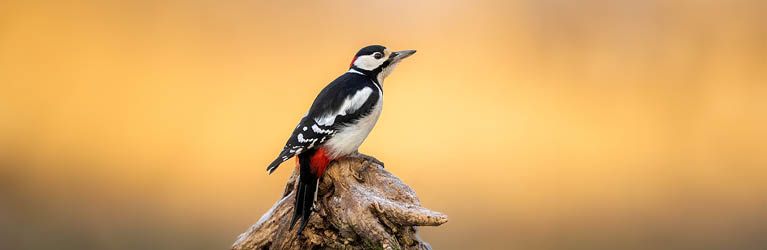
About the Great Spotted Woodpecker
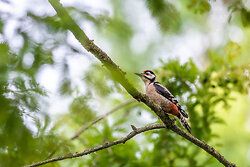
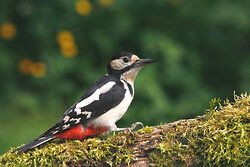
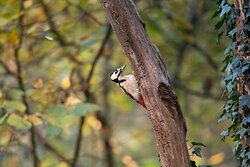
Unmistakable in most conditions: a conspicuous black and white woodpecker about the size of a Blackbird (much larger than the Robin-sized Lesser Spotted Woodpecker).
Males have a red patch on the nape (nape is black in females) and juveniles have bright red crowns, similar to adult male Lesser Spotted Woodpeckers, but the size difference alone is usually sufficient to avoid confusion. Lessers have white barring across the wings and back (“lesser are ladder backs”) rather than the white shoulder panels of the Great Spotted. Great Spotted Woodpeckers also have red undersides between the legs and the tail, creating the impression that they are wearing red shorts!
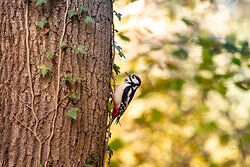
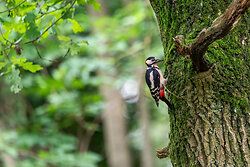
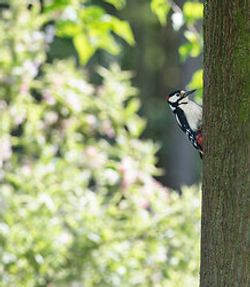
Photo gallery
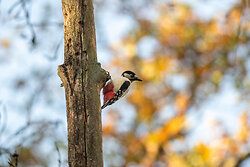
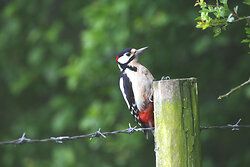
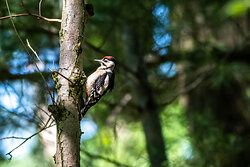
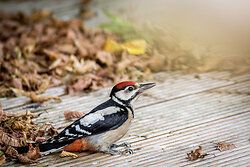
Specifications
| Scientific name |
Dendrocopos major
|
|---|---|
| Family |
Picidae
|
| Habitat |
Broad-leafed woodland, gardens and parks.
|
| Food |
Mostly insects excavated from bark or timber, will also eat fruit and seeds and readily take to feeders filled with sunflower hearts. Will also take nestlings from cavities in trees and may drill holes around tree trunks or limbs to feed on sap.
|
| Height |
23-26cm
|
| Weight |
70-100g
|
| Lifespan |
1 - 11 years
|
| Breeding time |
April-June
|
| Nest |
New cavity with usually excavated in a tree each year, accessed through a 50-60mm entrance hole. No nest lining apart from a few wood chips left from the excavation.
|
| Sound |
A loud “Tchick!” call. In the spring “drums” on trees to produce a short, drumroll sound.
|
| Characteristics |
The most common of the three woodpecker species found in Britain, and the only one found in Ireland where a small but growing population exists. Great Spotted Woodpeckers are regular visitors to gardens near broad-leaved woodland and will readily come to sunflower hearts and peanut cakes. Mealworms will also be taken readily once discovered.
|
| Children |
5-6 glossy white eggs. One brood a year.
|