BIRDS LOVE SEEDS...
WE LOVE COOKIES
We use cookies to make sure your visit to our website runs smoothly – from remembering your preferences to showing you the right nest box.
BIRDS LOVE SEEDS...
WE LOVE COOKIES
We use cookies to make sure your visit to our website runs smoothly – from remembering your preferences to showing you the right nest box.
Your basket
Support your local wildlife with our range of bird boxes and bird houses, designed for garden favourites like robins, blue tits, swallows, sparrows, and owls. Whether you’re looking for a traditional wooden birdhouse or a specialist swift or bluetit nesting box, our expert designs offer safe, durable shelter for birds to nest and thrive.
A nest box is one of the most rewarding things you can add to your garden. Natural nesting sites in the UK are disappearing fast - old trees are felled, ivy is cut back, and older buildings are sealed up - so garden birds are relying on us to fill that gap. Our range of over 100 nest boxes gives every common UK species somewhere safe to raise a family, from blue tits tucked into a compact 28 mm hole box to tawny owls settling into a deep roost box mounted high in a tree. Whether you are new to wildlife gardening or adding to an established setup, you will find the right box here, with expert guidance to make sure birds actually use it.
The single most important factor when choosing a nest box is the entrance hole size. Too large and predators can reach in; too small and your target species cannot get in at all. Below is a practical guide to the most popular UK garden birds and the boxes that suit them best.
If you are unsure which birds visit your garden, our online bird guide can help you identify them. Once you know your visitors, choosing the right box becomes straightforward.
Not all nest boxes are built the same, and the material makes a real difference to how long the box lasts and how safe it is for nesting birds. Here is an honest breakdown of each type we stock.
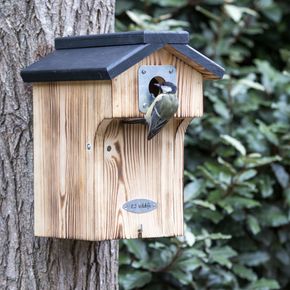
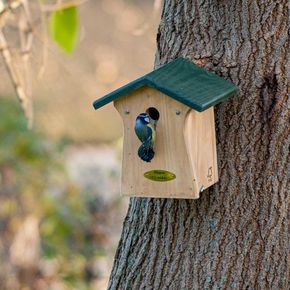
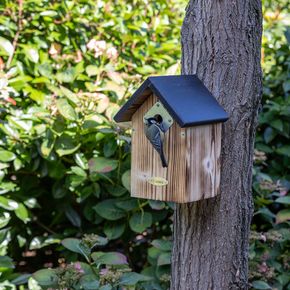
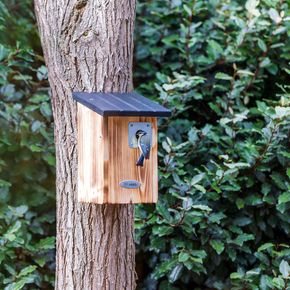
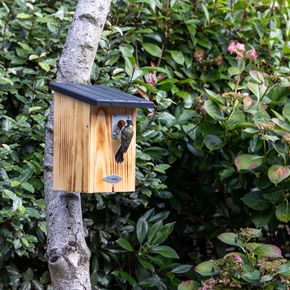
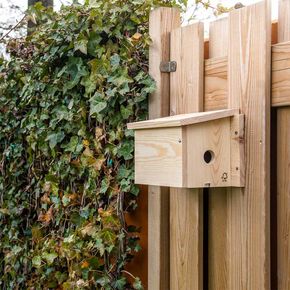
Our wooden nest boxes are made from FSC® 100% certified timber, meaning the wood comes from responsibly managed forests. Extra paint on the roof adds weatherproofing that helps the box last several seasons. Most models open at the front or side for easy annual cleaning, and all are fitted with robust, rust-resistant hangers. These are the most versatile option and suit the widest range of garden settings, from fences and walls to tree trunks and pergola posts.
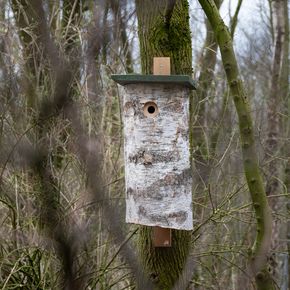
Birch log boxes are carved from a single section of natural birch trunk, which means every one is genuinely unique. The texture and appearance of real bark makes them the most natural-looking option available, blending effortlessly into woodland gardens or wildlife corners. Because the log is not hollowed out through a removable panel, these boxes are not designed to open for cleaning in the same way. If low-maintenance aesthetics matter as much as function, birch log boxes are the standout choice.
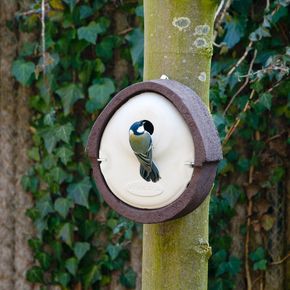
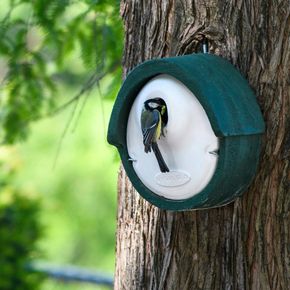
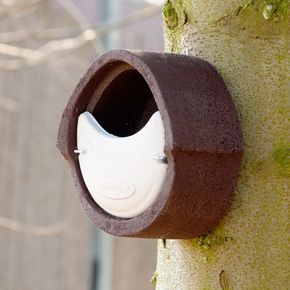
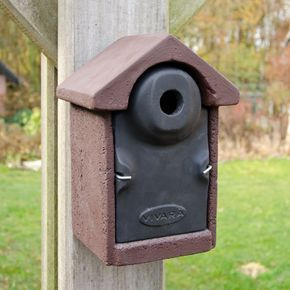
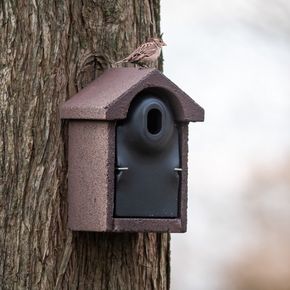
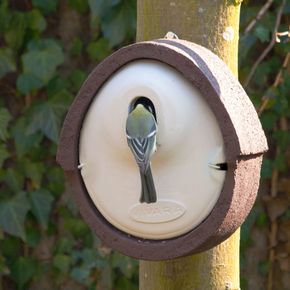
WoodStone is a proprietary blend of wood fibre and concrete. The result is a nest box that lasts at least three times longer than a standard wooden box. It is far more resistant to woodpeckers and other predators trying to enlarge the entrance hole, and maintains more consistent internal temperatures than wood alone. Every WoodStone model comes with a 10-year guarantee, making it the best long-term investment in the range. These boxes are particularly well suited to house martins, swallows, sparrows and species in areas where squirrels or great spotted woodpeckers are common visitors.
Beyond the everyday garden birds, we stock specialist nest boxes for species that need more specific conditions. These are the boxes that can make a difference to UK conservation.
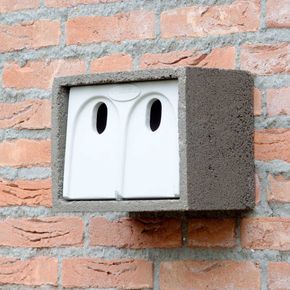
Swift boxes: Swift numbers in the UK have declined by over 50% since the 1990s, largely because the gaps in older buildings they traditionally nest in are being blocked during renovation. A swift nest box, positioned at least 5 metres high on a north or east-facing wall with clear flight access below, gives them an alternative. Swifts are faithful to nesting sites and will return year after year once established.
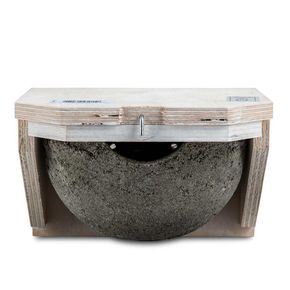
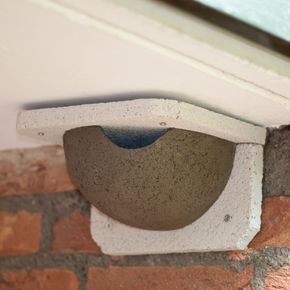
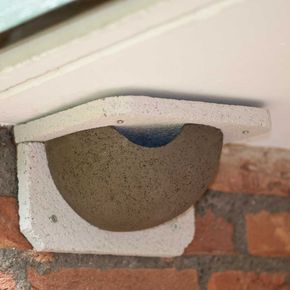
House martin and swallow cups: These open cup designs mimic the mud nests both species build naturally under eaves. They are available as single or double units and in both plywood and WoodStone, giving options for different budgets and durability needs.
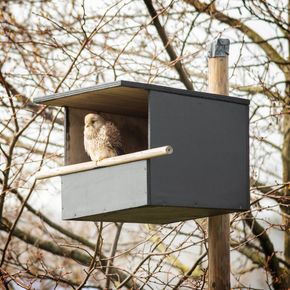
Owl boxes: Tawny owls, barn owls and little owls all have different requirements. Tawny owl boxes work best mounted on a mature tree with a clear flight path; barn owl boxes suit open farmland and should be positioned inside a barn or on a pole in an open field. If you have the right habitat, an owl box is one of the most spectacular additions you can make to any outdoor space.
Pied flycatcher and redstart boxes: Both species are hole-nesters that thrive at woodland edges and in gardens near mature trees. A standard 32mm box suits both, making these easy to cater for if you are in a suitable area.
Woodpecker boxes: Great spotted woodpeckers and green woodpeckers need deep boxes with a large entrance. These are best placed on mature trees, ideally oak or beech, well away from areas of frequent human activity.
A well-chosen nest box in the wrong position will be ignored. Placement matters almost as much as species suitability, and a few simple rules will dramatically improve your chances of success.
For a more detailed guide, visit our nest box placement guide.
Many people put up a nest box in March and wonder why no bird has moved in by April. The truth is that birds often need several weeks or even months to investigate a new box before committing to it as a nesting site. Putting your box up in autumn gives resident species like blue tits, great tits and robins the whole winter to explore it, roost in it on cold nights, and decide it is a safe place to raise young come spring.
Outside of breeding season, nest boxes serve a second, equally important purpose: winter roost sites. A single blue tit will regularly return to the same box every night from October through to February, sheltering from frost, wind and predators. On very cold nights, several individuals may huddle together in one box to share warmth. The more nest boxes you have in your garden, the better your resident birds will fare through winter.
The best time to clean out a nest box is September or October, once the last brood of the year has fledged and before birds start using the box for winter roosting. This gives any new occupants a clean, fresh start. For birds that have a second brood late in the season, wait until you are confident the box is empty before opening it.
Birch log boxes cannot be opened for cleaning in the same way as wooden or WoodStone models. For these, you can flush the interior with hot water and allow to dry completely.
There is no shortage of nest boxes on the market, but not all of them are designed with birds in mind. Here is what sets our range apart.
Adding a nest box to your garden is one of the simplest and most effective things you can do for UK wildlife. Natural nesting sites are scarce, competition for space is fierce, and even a single well-placed box can make the difference between a pair of blue tits successfully raising a brood and failing to find a suitable site at all. If you want to attract even more birds to your garden, explore our range of bird food and bird feeders to complement your new nest box. The birds will do the rest.
| Cookiename | Type | Expires | Description |
|---|

.jpg?profile=category_page_grid)

.jpg?profile=category_page_grid)
_RK_21.jpg?profile=category_page_grid)
_RK_13.jpg?profile=category_page_grid)